

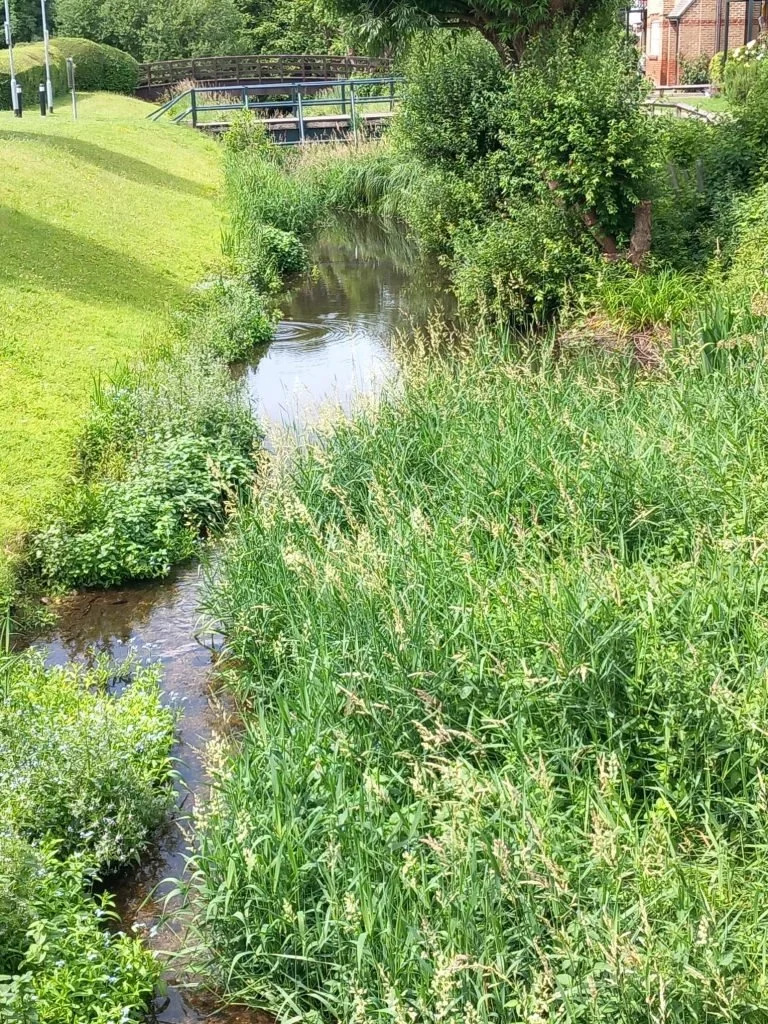
Historic Chalk Stream Rickmansworth
Unlocking Three Rivers' Hidden Blue Heritage: Chalk Streams, Mill Races, and the Future of Our Waterways
An update from S3R Member Sue Quelch
Photo Credits: Rickmansworth & District Residents Association, Gillian Lipton
When you walk through our district - whether strolling around the Rickmansworth Aquadrome, wandering through Croxley Green, or following the course of the River Colne - it is easy to admire the scenery without realising just how rare and historic our local waters really are.
Did you know that 85% of the world’s chalk streams are found right here in the UK?
We are exceptionally lucky to have three of these globally precious habitats flowing through our district. Chalk streams are often called England’s Amazon rainforests: clear, mineral-rich, cold-water habitats that support an abundance of wildlife, from kingfishers and water voles to brown trout and macroinvertebrates. Yet despite their global rarity, many residents aren’t fully aware of just how special our blue spaces are - or the delicate balancing act needed to protect them.
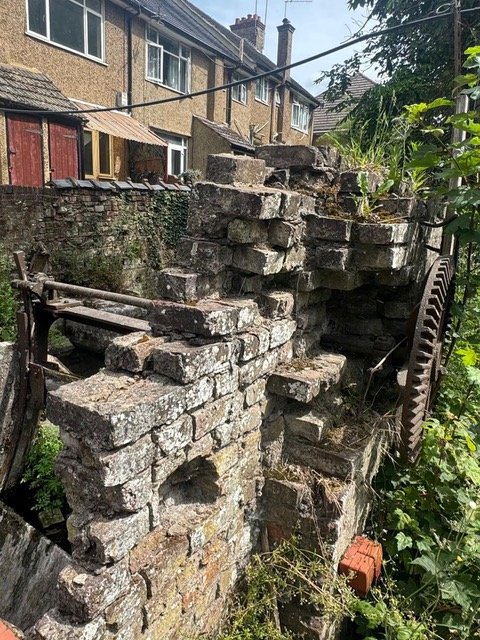
Water Wheel on the River Colne
Powered by Water: The Heritage of Our Mill Streams
Our rivers aren't just natural wonders; they are living historical artifacts. During the Industrial Revolution, water was the heartbeat of local industry. Without the power of our chalk rivers, the area's rich industrial heritage simply wouldn't exist.
Along the River Colne and its tributaries, paper mills - such as the historic Croxley Paper Mill and Frogmore Wharf nearby - silk mills, and water-powered businesses thrived. To harness this natural energy, early engineers modified the landscape by creating mill streams; also known as mill races or leats.
To ensure a steady supply of water to power mill wheels, historic engineers installed weirs - low barriers built across the main river channel just downstream of a mill stream intake.
How a weir works: By holding back water, a weir raises the river level on its upstream side (creating "head" or water pressure). This elevated level reliably diverts water into the artificial mill stream - even during dry periods when natural river stages fluctuate. Any excess water simply spills over the weir crest and continues down the main river.
From old water bottling heritage like the historical Old Franklin company in Rickmansworth to the intricate network of channels branching off the Colne, our local geography was reshaped to work alongside nature.
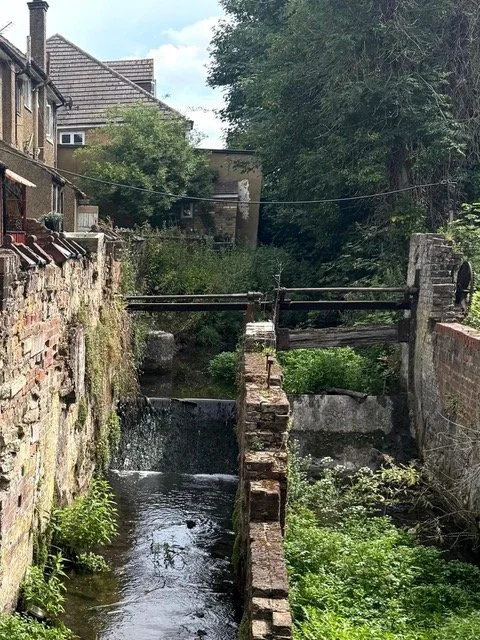
Industrial heritage on the River Colne
The Modern Dilemma: Balancing Ecology and Conservation
Today, these historical structures leave us with an ecological puzzle. At the Rickmansworth Aquadrome, part of the broader regeneration plans supported by the National Lottery Heritage Fund involves the potential removal of the Bury Weir inside the Woodland Walk.
This presents a classic environmental discussion with valid viewpoints on all sides:
The River Restoration View: Modern conservation practice often favours removing artificial barriers like old weirs. Removing a crumbling weir can restore natural river dynamics, allow fish species to migrate freely upstream and improve the overall ecology of the main chalk river channel.
The Local Heritage and Habitat View: Local residents and naturalists hold a deep affection for the mill streams created by these historic structures. Over the past two centuries, these mill channels have formed unique ecosystems of their own - frequently hosting vibrant birdlife, diverse invertebrates and even elusive otters. Residents whose homes back onto the mill stream are naturally concerned that removing upstream barriers could drop water levels and dry out these established aquatic habitats.
Furthermore, complex land histories - such as historical dumping sites and asbestos management around the Aquadrome floodplain - mean that any work near riverbeds must be handled with extreme care and rigorous hydrological studies.
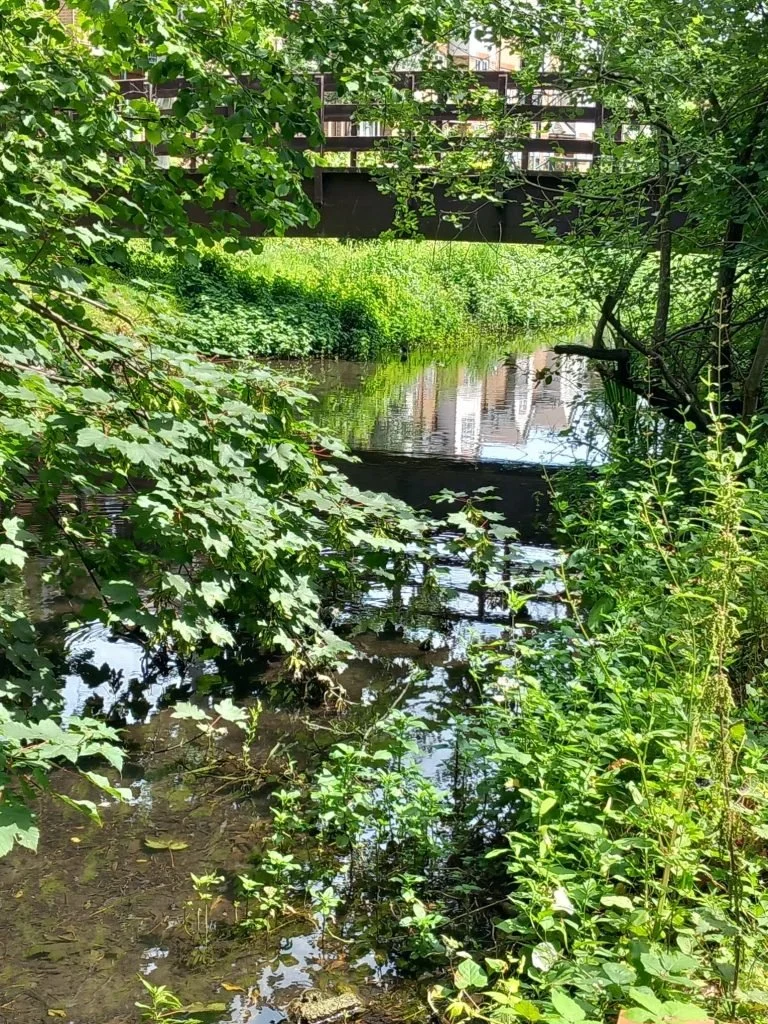
Mill Stream, Rickmansworth
Working Together for Our Waterways
The good news is that local environmental governance involves multiple checks and balances. The Environment Agency (EA) acts as the regulating body for main rivers like the Colne and the mill stream. Works cannot proceed without EA permits ensuring that local flood risks are not heightened and that surrounding ecosystems are safeguarded.
As discussions continue around hydrology reports, fish passes and riverbed restoration (such as using raised gravel riffles to maintain flow into offshoots), one thing is clear: our community cares deeply about its natural heritage.
How You Can Get Involved
Look Closer: Next time you pass a local river or underpass - such as the nature and heritage artwork initiatives in our local subways - take a moment to appreciate the history flowing beneath your feet.
Join the Conversation: Stay informed about local consultation meetings, council environment forums and community updates regarding the Aquadrome and local nature reserves.
Support Local River Health: Keep an eye out for river cleanup days, citizen science water-monitoring projects and local environmental initiatives across Three Rivers.
Our rivers connect our past to our ecological future - let’s work together to ensure they stay healthy, vibrant and cherished for generations to come.
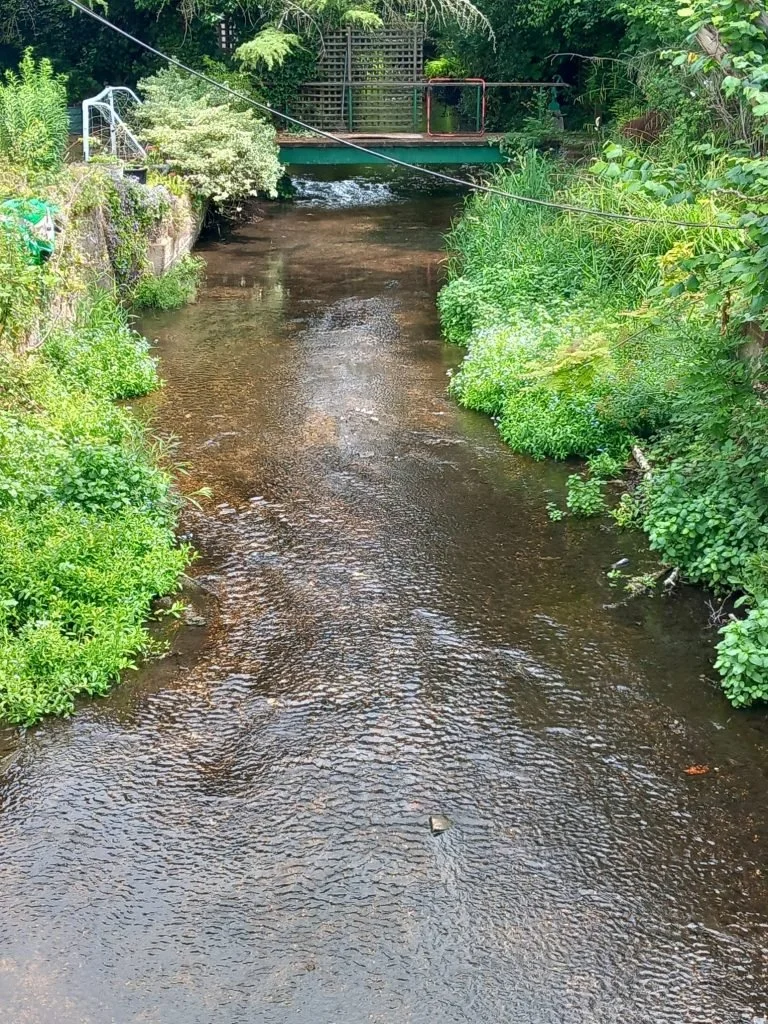
Mill Stream Rickmansworth