

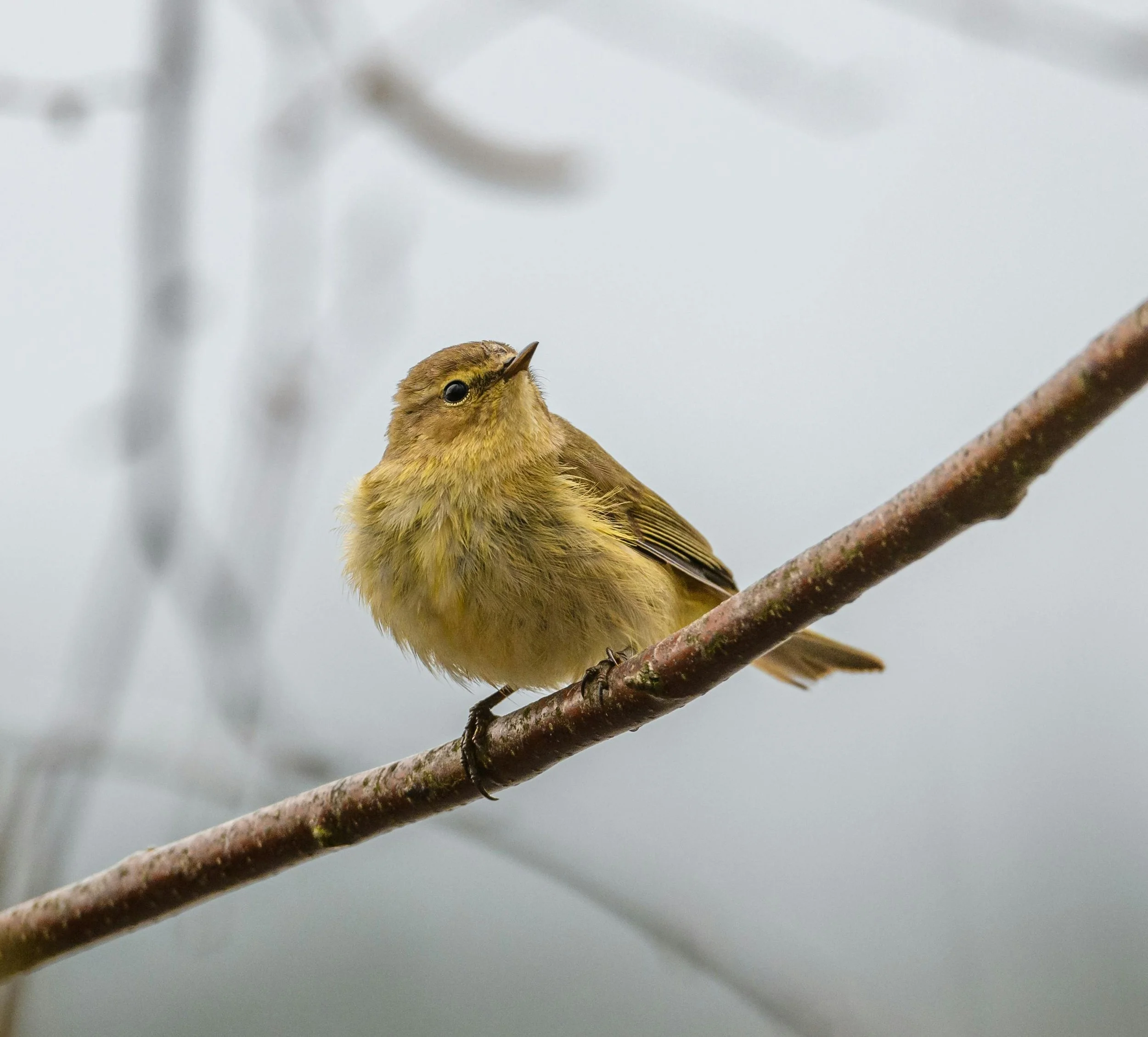
Chiffchaff
Birds to Look Out For in the Three Rivers Area This Winter
The short days of winter are brightened up by an ever-changing array of birds which visit our area. Many of these birds are nomadic and appear in varying numbers depending on cold weather, level of breeding success or availability of food.
Three Rivers offers a surprisingly rich diversity of habitats to explore which in turn provide winter refuge for many bird species. Those species, and the numbers involved, reflect changes in our weather and the quality of the wider environment. Some have benefited from milder conditions, while others are in decline due to habitat loss. In this blog, we’ll look at winter birds which have both increased and declined in our area over the past three decades.
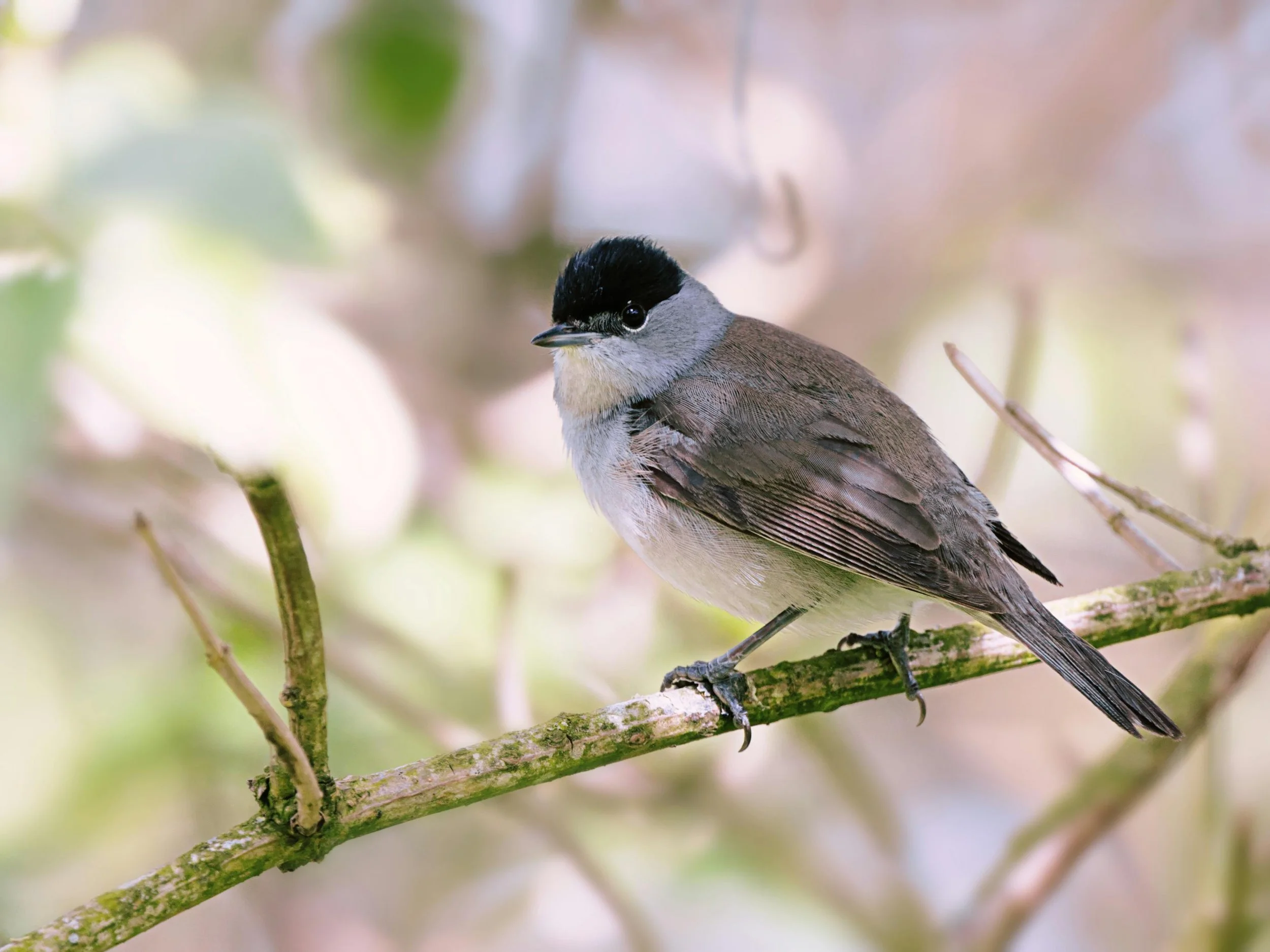
Blackcap
Winter Warblers
Until recently, almost all of the warbler species visiting our region have been summer migrants. Now, a winter walk around Stocker’s Lake often produces three species which have adapted in different ways to survive the season.
Chiffchaffs are small, greenish warblers which can be tempted to occasionally break into their onomatopoeical song if the sun breaks through. Chiffchaffs show a strong affinity for sewage works in winter but can also be seen in bushes along river banks, often in the company of flocks of other species.
Blackcap is large for a warbler, approaching Robin in size, and can be identified by their plain grey-brown plumage topped off with a neat black crown in males, reddish brown in females. Blackcaps have changed their migration patterns in recent years, with birds from central Europe taking the shorter trip to our mild shores rather than flying further south in search of warmer climes. This winter appears to be a productive one for this species, with several having taken up residence to feed on ivy and holly berries both around Stocker’s Lake and in nearby gardens.
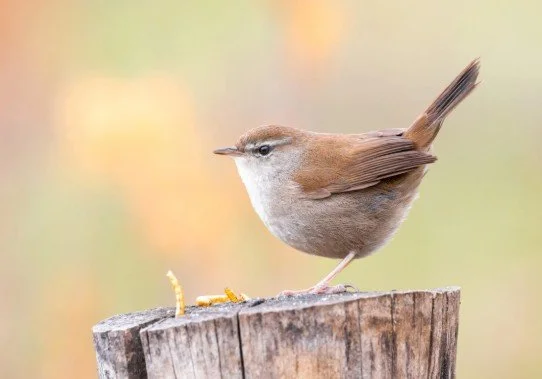
Cetti’s Warbler
Look Out For Cetti’s Warbler
Cetti’s Warbler is a species which was first seen in Britain as recently as the 1960s. Since then it has successfully progressed northwards, taking advantage of a series of mild winters to establish themselves as far north as Northumberland. Stocker’s Lake is a particularly good place to encounter this bird, although it is much more often heard than seen. Its indignant song can be heard as it seems to unleash a tirade of expletives in a loud song usually delivered from deep in a tangle of brambles or damp scrub.
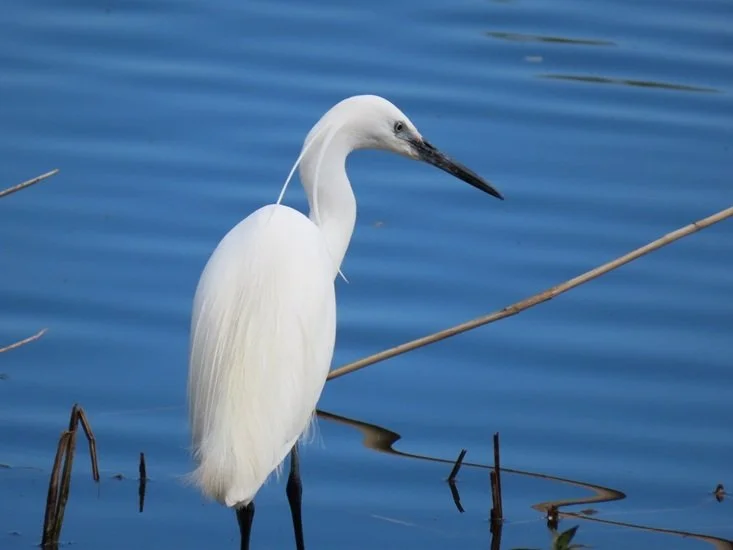
Little Egret
Snowy White Egrets
Little Egret is another bird which is now firmly established in the area, having shaken off its former rarity status to become a familiar sight around Stocker’s Lake throughout the year. Little Egret is one of many wetland species whose ranges are shifting northwards, and they now breed alongside the Grey Herons at Stocker’s.
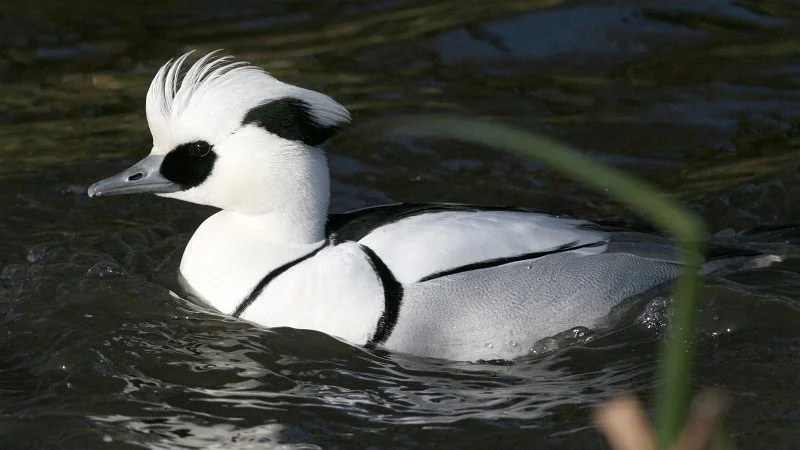
Smew
Declining Species
Declining species are sadly in the majority, reflecting overall declines in numbers of birds around the world today. Some of these are familiar garden birds, including Greenfinch and Chaffinch, both of which can still be found albeit in smaller numbers than in the past. Several water birds are also disappearing from the area. Lapwings and Golden Plovers formed three-figure flocks around Woodoaks Farm and Stocker’s Lake until relatively recently but now just a dozen or so Lapwings hang on, often resting on the tern rafts at Stocker’s.
One of our rarest ducks was, until around 2000, something of a local speciality. The Smew is arguably the most beautiful of our waterfowl, the drake being especially striking with its white plumage and intricate black markings. Smew was formerly an annual winter visitor to Stocker’s Lake, occasionally reaching double figures. Now it is a sporadic visitor, with a drake three winters ago being the first here for five years.
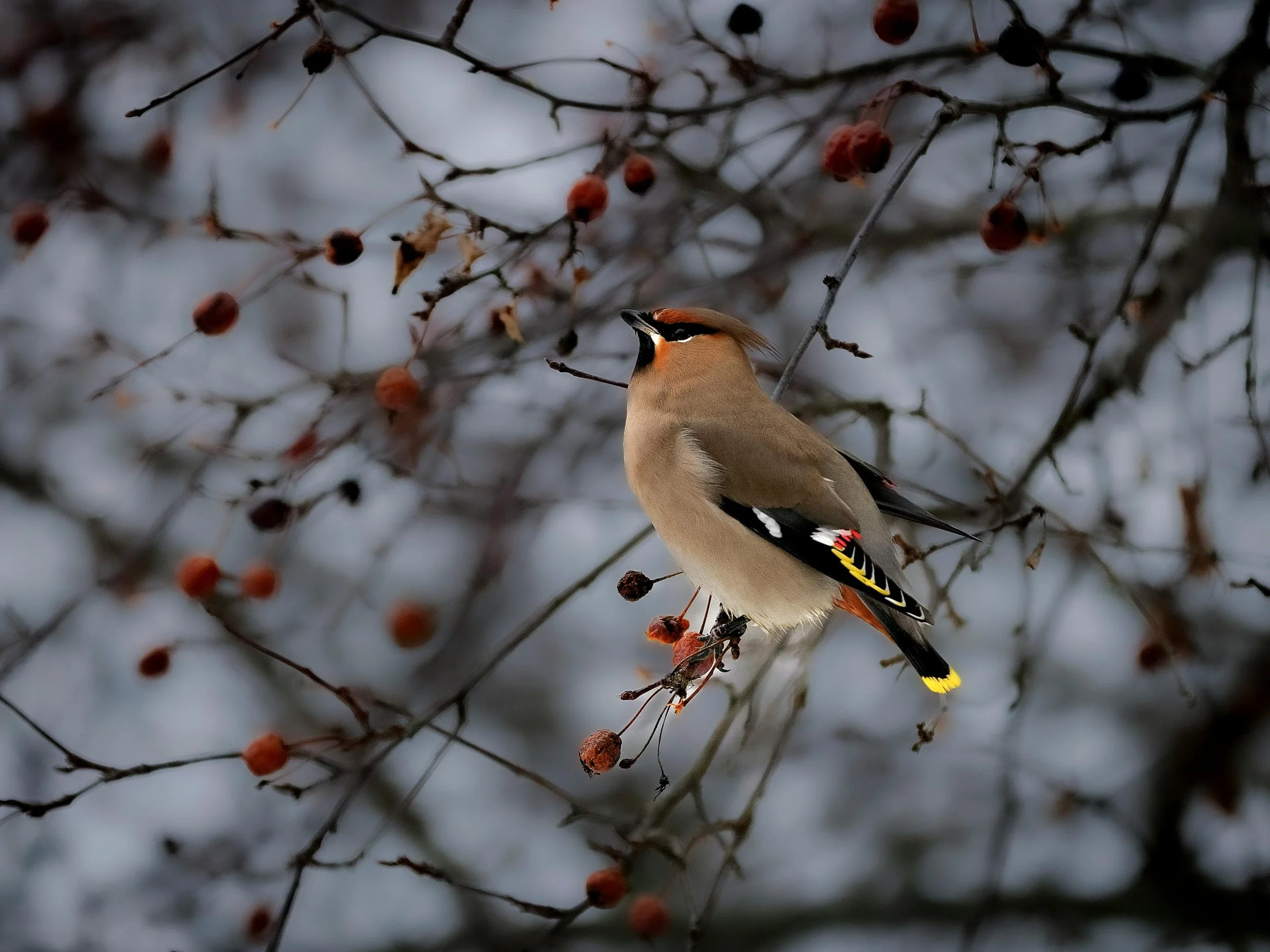
Waxwing
The Elusive Waxwing
While many of our wintering birds show clear trends, others are less predictable in their appearance. One of the most sought-after of these is the Waxwing, an exotic, crested, colourful visitor from the Arctic. Their tameness and preference for gardens and supermarket car-parks makes them popular and well-watched when they do appear. One flock frequented gardens around a heavily-laden rowan in Chorleywood in early 2024, and going back to 2005, a flock of about 100 birds spent a few days around Moneyhill Parade.
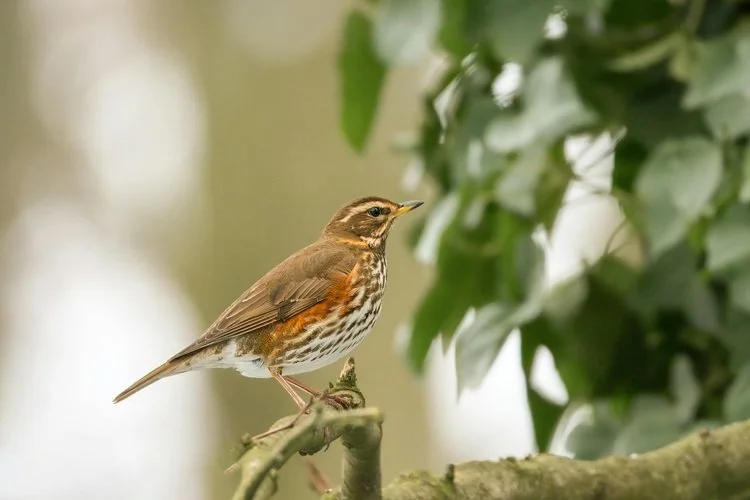
Redwing
Regular Visitors
Among all of this change, we can still find some constants or smaller variations to keep things interesting. Redwings are small thrushes from Scandinavia which visits our gardens, often in large numbers, to gorge on holly and ivy berries. Look for the creamy stripe over their eyes, and the bright red flank and underwing which distinguishes them from Song Thrushes.
Try the Merlin App
On the subject of Song Thrushes, a surprising feature at this time of year is the sudden increase in numbers of singing birds. Silent from late summer, clear, calm mornings from late November onwards bring them back out onto their territories.
From being elusive and hard to find, suddenly their song fills the air as they take up singing posts all around the Aquadrome and Stocker’s Lake. Their song is loud and varied, but distinctive with its habit of repeating phrases. It’s a nice one to learn – try using the Merlin App if you aren’t sure but soon you’ll be able to pick out their song among others in the dawn chorus.
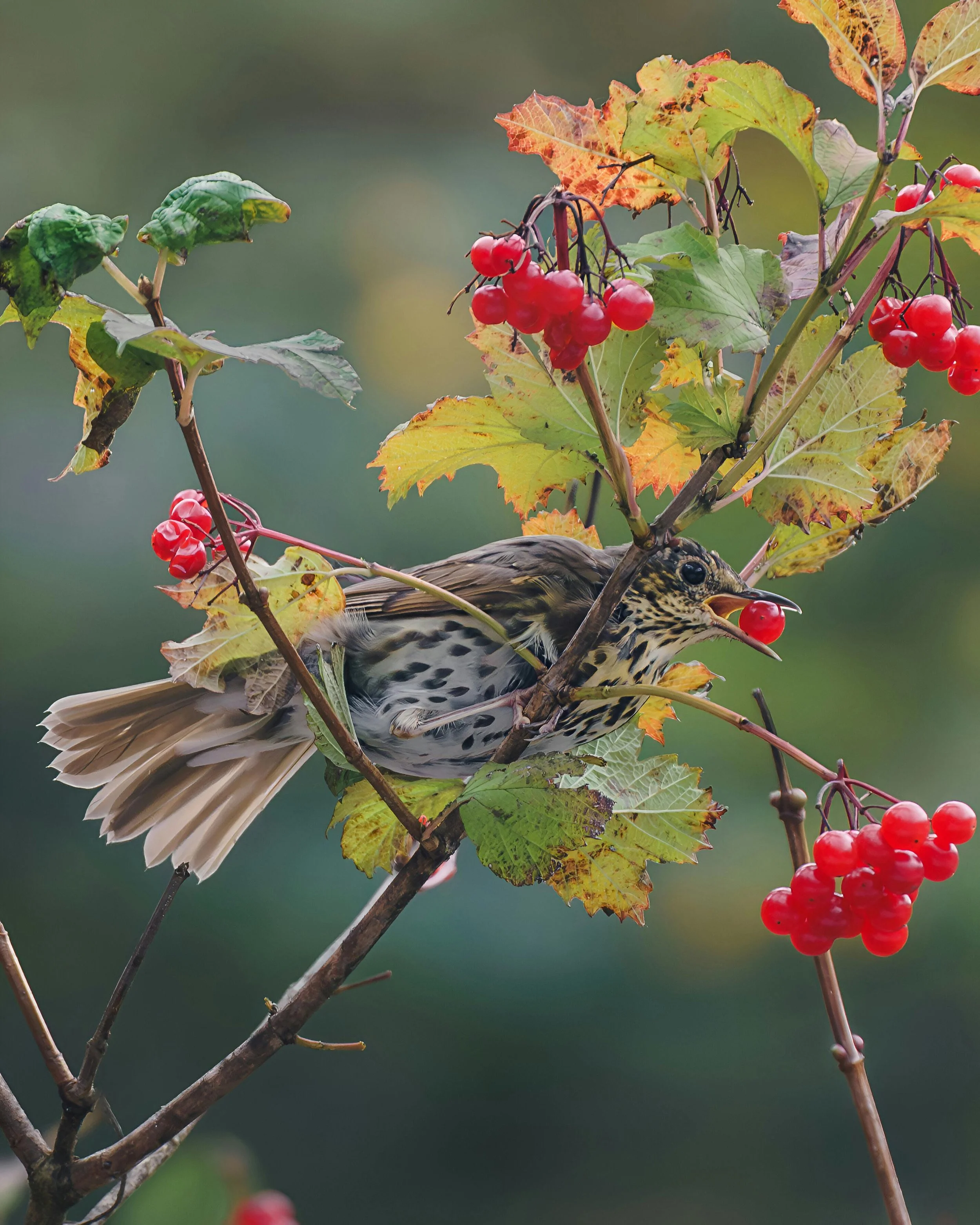
Song Thrush
Please Share Your Sightings!
We’d love to see what birds you spot around Three Rivers this winter. Send your photos to hello@sustainablethreerivers.org—we’ll share the best ones on our website and social media.
This article was written by Stephen Younger, long-term local birdwatcher and author.